However, if you stay in Thailand and earn income here, you may also have tax responsibilities.
Understanding how personal income tax works in Thailand can help foreigners avoid confusion and ensure they comply with Thai tax regulations.
In this article, we will walk you through the basics of the Thai personal income tax system — including who needs to pay tax, how tax residency works, what income is taxable, and when and how to file your tax return.
What is Personal Income Tax (PIT) in Thailand?
Personal Income Tax (PIT) is a tax imposed on income earned by individuals. In Thailand, it applies to both Thai citizens and foreigners who earn income in the country.
In general, personal income tax in Thailand for foreigners follows the same progressive tax system used for Thai nationals, where tax rates increase as income rises. Foreigners may be required to pay Thai personal income tax if they work, run a business, or earn income from sources in Thailand. In some cases, foreign-sourced income may also be taxable, depending on the individual’s tax residency status.
Who needs to pay tax in Thailand?
Individuals who earn income in Thailand are generally required to pay personal income tax. This applies to both Thai nationals and foreigners.
Foreigners may need to pay Thai personal income tax if they:
- Work for a company in Thailand
- Operate a business in Thailand
- Provide services within Thailand
- Receive rental income from property in Thailand
- Receive dividends or other investment income from Thai sources
Even if your employer is located outside Thailand, income related to work performed in Thailand may still be subject to Thai tax rules.
Tax residency and foreign-sourced income rules
Another important concept in the Thai tax system is tax residency.
An individual is considered a tax resident in Thailand if they stay in Thailand for 180 days or more within a calendar year.
The tax treatment depends on residency status:
Non-residents
- Taxed only on income sourced in Thailand.
Residents
- Taxed on income sourced in Thailand.
- May also be taxed on foreign-sourced income that is brought into Thailand.
Recent guidance from the Thai Revenue Department has clarified that foreign income remitted into Thailand may be taxable, depending on the situation. Because of this, many expatriates should pay attention to how and when foreign income is transferred into Thailand.
Types of Taxable Income in Thailand
Under the Thai Revenue Code, personal income tax in Thailand applies to eight categories of assessable income, defined under Sections 40(1)–40(8).
These categories cover most types of income that individuals may receive, such as employment income, professional fees, business profits, investment income, and rental income.
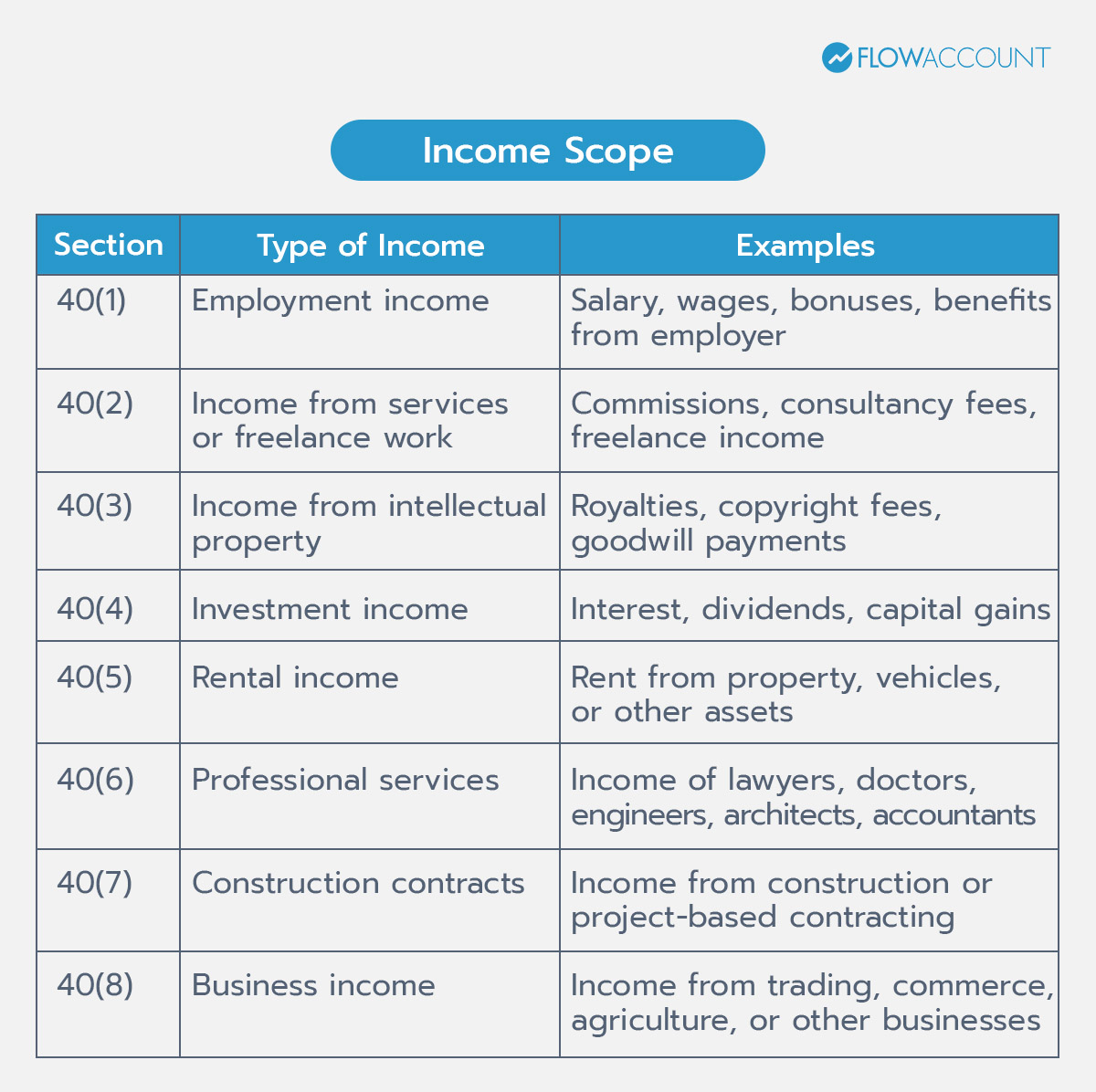
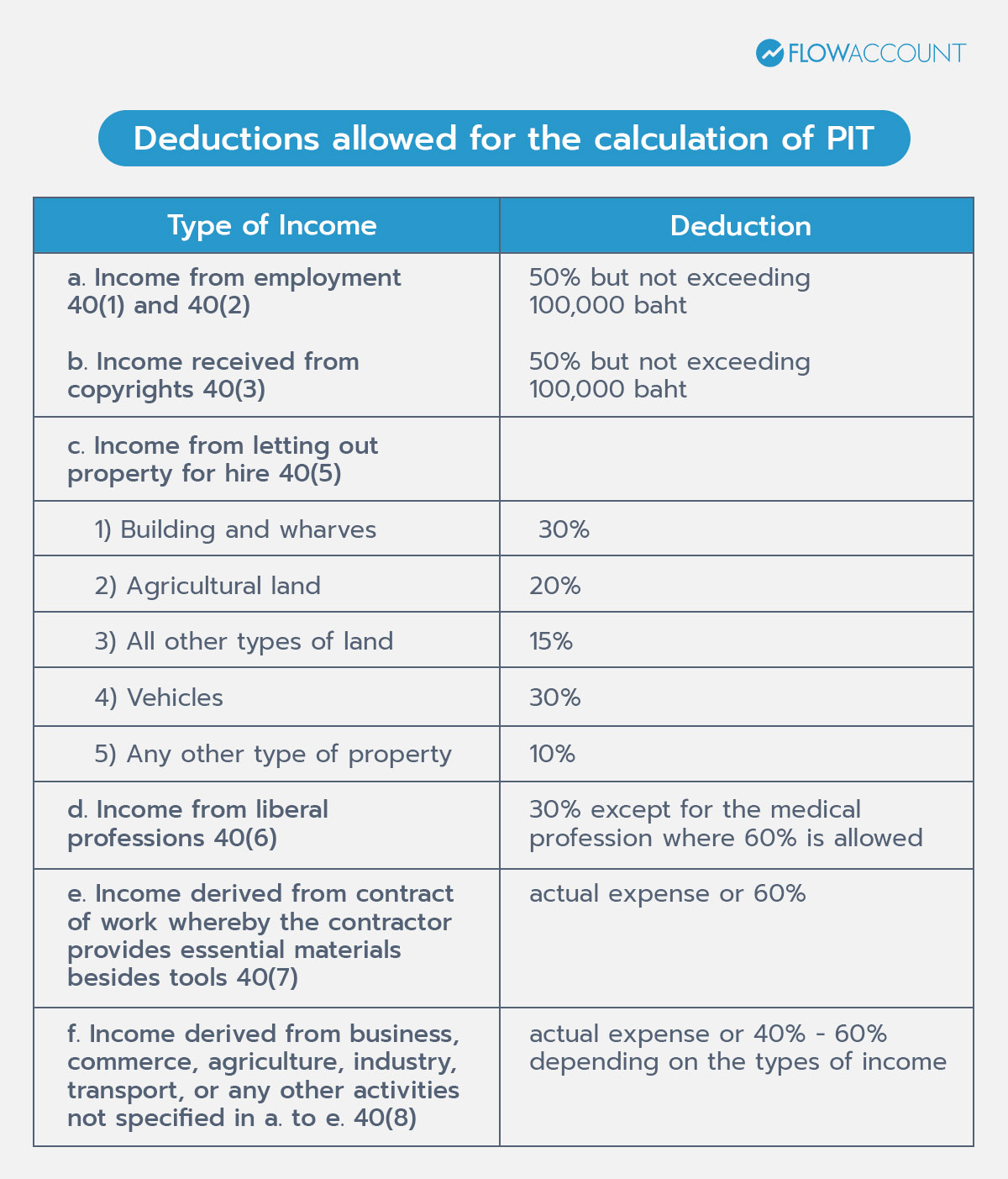
Different types of income may be subject to different expense deductions when calculating taxable income.
Personal Income Tax (PIT) Rates
Personal income tax in Thailand uses a progressive tax rate system. The current personal income tax rates are as follows:
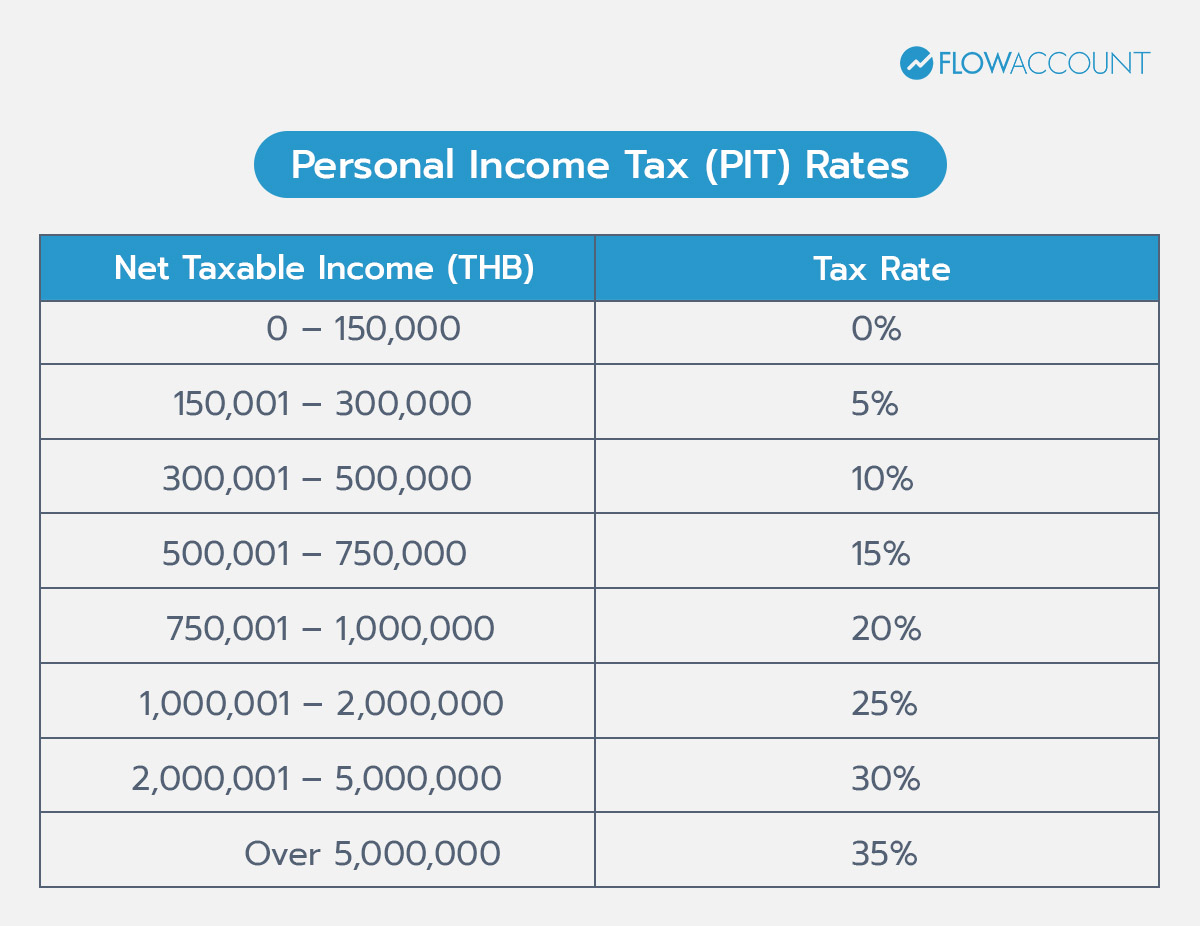
Tax is calculated based on net taxable income after deductions and allowances.
TAXABLE INCOME = Assessable Income - deductions - allowances
Tax Deductions and Allowances for Personal Income Tax in Thailand
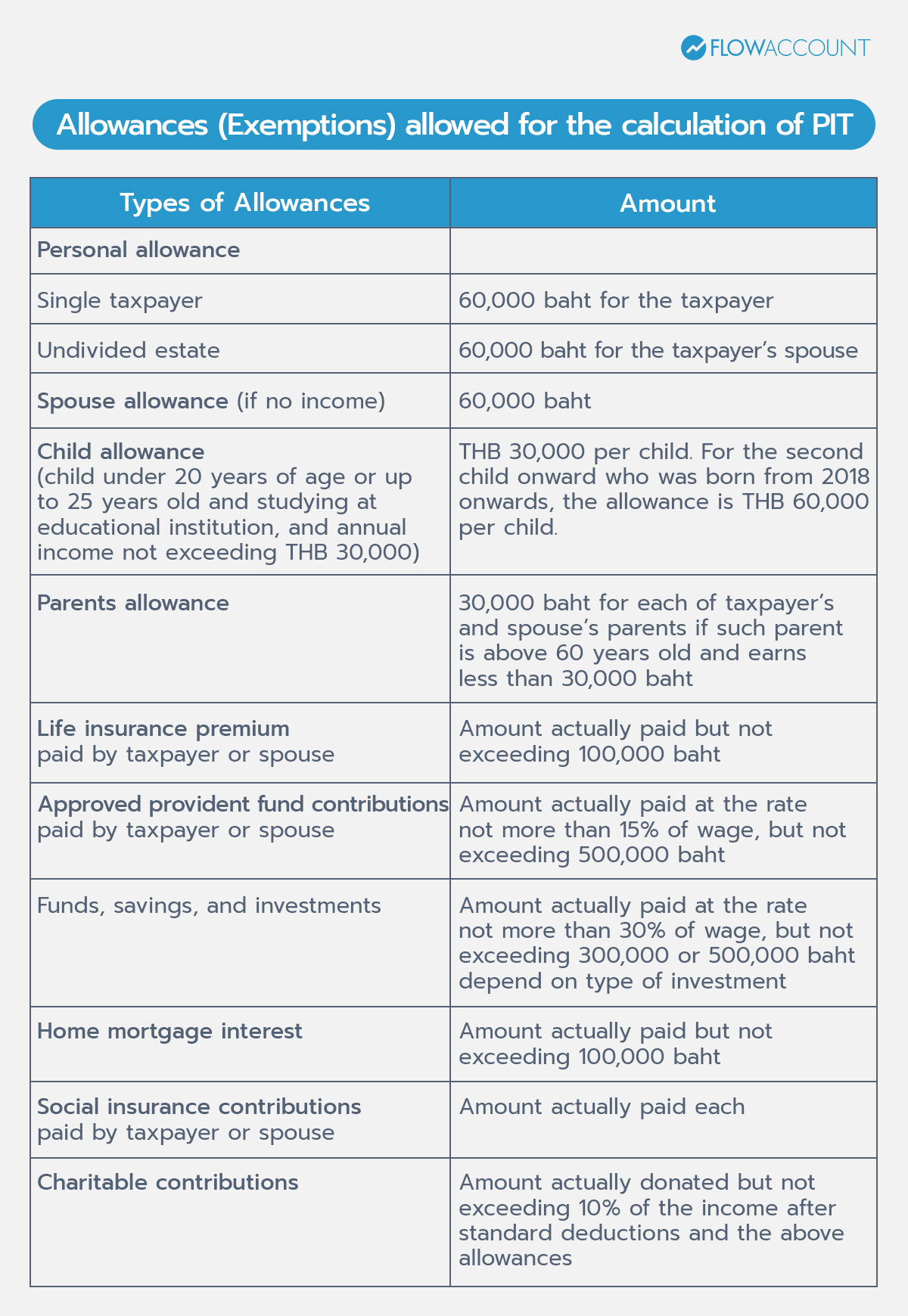
Thailand provides several allowances and deductions that help reduce taxable income.
Common examples include:
Deductions allowed for the calculation of PIT
Allowances (Exemptions) allowed for the calculation of PIT
When to File Personal Income Tax in Thailand
The Thai tax year runs from 1 January to 31 December.
Individuals must file their Thailand tax return annually, typically within the first three months of the following year.
The typical filing deadlines are:
- Paper filing deadline: 31 March
- Online filing deadline: usually extended by 8 days, to early April
Employers often issue an income certificate (similar to a tax statement) that helps employees prepare their tax returns.
How to file personal income tax in Thailand
Personal income tax returns in Thailand can be filed through several methods, making it easier for expatriates and foreigners to comply with personal income tax regulations in Thailand.
- Online filing (recommended)
The Thai Revenue Department provides an e-filing system where taxpayers can submit their tax returns online.
- Paper filing
Taxpayers may also submit their tax returns at the local Revenue Department office.
- Through a tax professional
Many expatriates choose to work with accountants or tax advisors who can help prepare and file the tax returns correctly.
The required documents usually include:
- Passport
- Work permit
- Income statement
- Withholding tax certificates
- Documentation for deductions
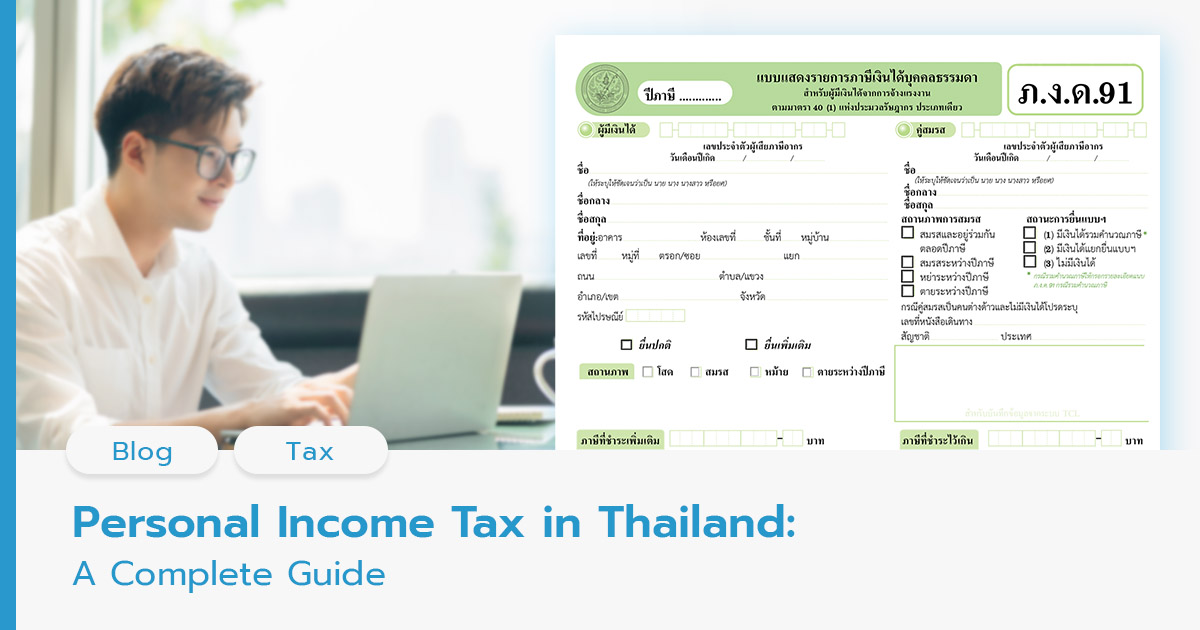
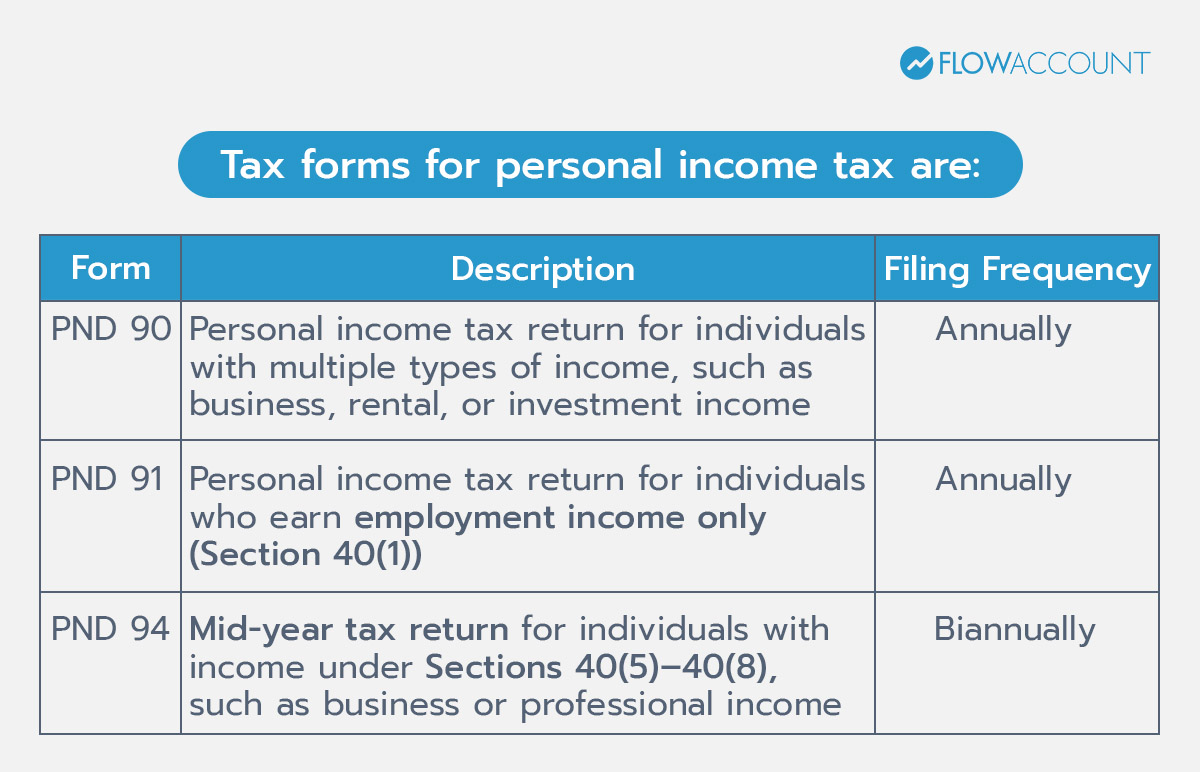
Tax forms for personal income tax are:
Penalties for late filing or non-compliance
Failure to file or pay personal income tax in Thailand on time can result in penalties.
Typical penalties include:
Late filing penalty
- Up to 2,000 THB
Surcharge on unpaid tax
- 1.5% per month on the unpaid tax amount
If tax authorities determine that tax has been intentionally underreported, additional penalties may apply.
To avoid unnecessary costs, taxpayers should ensure that their tax returns are filed accurately and on time.
Managing income records, tax documents, and financial information can become complicated, especially for expatriates who may have income from multiple sources.
FlowAccount helps individuals and small business owners manage their financial records more efficiently. With FlowAccount, users can:
- Track income and expenses
- Organize financial documents
- Prepare accounting records
- Work more easily with accountants and tax advisors
Having well-organized financial records throughout the year can make personal income tax filing in Thailand much simpler and more accurate.